Workforce Transformation Guide: AI, Skills & Future of Work
Treating workforce transformation as a defined function, with its own owner and plan, leads to deliberate, strategic decision-making. That gap between what an organization buys and what its workforce actually uses is, in many cases, a workforce transformation gap wearing a digital transformation label. That distinction matters because most failed technology initiatives don’t fail because […]
Treating workforce transformation as a defined function, with its own owner and plan, leads to deliberate, strategic decision-making. That gap between what an organization buys and what its workforce actually uses is, in many cases, a workforce transformation gap wearing a digital transformation label. That distinction matters because most failed technology initiatives don’t fail because of the tools, but because nobody built reskilling, communication, and change management into the plan from the start. In many cases, workforce transformation and digital transformation seem to represent the same phenomena, given the crucial role technology plays for workforces everywhere.
It shows you the process to create a more efficient, productive workforce structure by analyzing workforce gaps, managing employee churn and retention, and segmenting staff for success. When answering “What is workforce transformation,” it’s also worth clarifying what it’s not. This guide breaks down what workforce transformation actually means, what’s driving it right now, how to lead it without losing your people along the way, and the metrics https://corporatenex.com/talent-management-strategies-for-hr-leaders.html?noamp=mobile that measure success. For some, it’s a digital transformation, but positioned differently.
Therefore, a practical approach is to translate culture into observable behaviors. In practice, effective change management includes communication, participation, training, manager enablement, feedback and reinforcement. Leadership responsibilities include the ability to create clarity, enable change and develop people through uncertainty. Workforce transformation https://youthonline.ca/babysitting/why-are-most-nannies-female should therefore consider organizational design and decision architecture together.
Modern platforms now make it possible to map skills across job roles, assess workforce readiness, and personalize development at scale. Organizations may struggle to show whether the transformation is improving workforce and business outcomes. Heavy workloads, limited budgets, and unrealistic timelines can affect training and participation. Workforce transformation can improve business performance, but organizations may face challenges that slow progress or reduce employee support.
Insights and research
The workflow itself is redesigned because technology enables a fundamentally different way of producing the outcome. Instead, start with tasks and workflows rather than assuming an entire job should remain unchanged or disappear. One of the biggest opportunities created by AI is the ability to reconsider how work is structured. Once the required capabilities are clear, the next question is how to attract, develop, manage, retain and prepare that talent over time.
Instead, it is about building an organization capable of adapting when technology, customer requirements and business strategy change.
Focuses on building the skills the business will need next.
Ability teaches employees how to put knowledge into practice through hands-on coaching, expert resources and performance monitoring.
At the same time, organizations will combine recruitment with upskilling, reskilling and internal mobility.
Building Agile TeamsBuild cross-functional teams that can learn quickly, collaborate effectively and adapt to change.
As technology and business needs evolve, learning should become an ongoing process rather than a one-time activity.
Organizations need to evaluate its impact at the task and workflow level rather than assuming that AI simply replaces entire jobs. As technology performs more information-processing tasks, capabilities such as judgment, critical thinking, communication, creativity, leadership and collaboration remain important. Test the new model in selected functions, teams or workflows before scaling. Large-scale workforce transformation benefits from prioritization, pilots and iterative learning.
Track capability, employee and business outcomes and adjust the workforce strategy as conditions change. Change structures, decision rights, team models and governance where necessary. Transformation designed entirely from the top can miss operational realities and create unnecessary resistance. Learning needs to connect to actual capability requirements and career opportunities. Importantly, the key is to avoid measuring activity as if it were impact.
Together makes progress
A company can license the best AI tools, but if employees haven’t been trained to use them, don’t trust them, or feel threatened by them, adoption stalls. Workforce transformation is the deliberate redesign of an organization’s people, structure, and skills to keep pace with how work itself is changing. That’s why it’s recommended to break it into small pieces and identify replicable processes to reduce the scale of the work. Regularly check in to ensure your transformation strategies are effectively deliver new skills and meet company needs.
While some specific technical skills may receive a lot of buzz, a company’s actual workforce needs are highly dependent upon its organizational goals. Without knowing what skills you have in your workforce, it’s impossible to know what gaps exist. Effectively launching a workforce transformation requires careful planning. According to a Newsweek survey, during the COVID-19 pandemic, the rate at which certain workplace skills become obsolete increased by more than 70%. But keeping employees at the top of their game is most critical of all. And many companies are struggling to keep up with the pace of that evolution.
That makes it hard to see where capability gaps truly sit. AI can augment work, replace parts of work, or expose weak processes that were already there. Transformation fails https://business-soulwork.com/where-to-invest-in-leadership-development/ when leaders assume people will simply adjust because a new tool or model makes sense on paper. That means companies need pathways that fit real job transitions, not just course catalogs.
Types of Workforce Transformation
Before diving into any transformation initiative, focus on achieving specific, measurable business outcomes. By analyzing insights from HR data and other tools, leaders can identify what is working and where improvements are needed. Organizations must establish concrete metrics at the outset and revisit them regularly to assess progress and make adjustments. Tailored learning initiatives and leadership development programs help ensure that employees and managers alike have the resources needed to succeed in their roles.
Nagarkot is also the perfect destination for practicing Yoga and meditation. The calm setting, panoramic vistas, lush greenery in the surroundings, and fresh air are unspoiled setups for yoga and meditation. For rejuvenation, indulge in yoga and meditation activities.
Nagarkot is the perfect closest destination from the capital for relaxation and to spend quality time with family or loved ones. Just a few kilometers away from Kathmandu, Nagarkot is an ideal destination to simply sit, relax, and enjoy amidst the peaceful ambiance. Spend time adoring mountain vistas, and surroundings.
The vicinity of Nagarkot is abundant with greenery and an ideal habitat for diverse flora and fauna. The diverse bird species such as raptors and migratory birds are some prime attractions here. Bird-watching in this serene environment and identifying, and observing can be a fun activity.
The natural surroundings in the Nagarkot look dreamlike. The scenic landscapes, mountain vistas, attractive villages, terraced fields, sunrise views, local culture, and ancient cultural heritages are the best visuals for any photography lover. Capture the best sightings and set them for the best memories.
Mountain Biking is one of the adventurous sports which can be explored on the Nagarkot trails. Adoring the beautiful landscapes, and picturesque views, mountain biking lovers can go for this exciting adventure on the popular ‘Loop Route’. Rent the bikes for this mountain biking adventure.
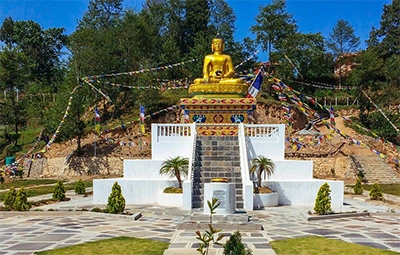
Sightseeing to nearby peaceful but beautiful Buddha Peace Park by an hour’s walk is a pleasant experience. The Grand Golden Buddha statue that overlooks the beautiful valley is not to be missed. An entry fee is required to get here. Planting a sapling in the memory of your loved ones is one of the best […]
Sunrise view is the best attraction of the Nagarkot. The sunrise view over stunning Himalayan ranges from the Nagarkot View Tower is captivating. The panoramic Himalayan views including the world’s highest Mt. Everest on a clear day are a treat to watch. We assure you the sunrise viewing is sure to enchant you and will […]
Nagarkot is far from the hustle and bustle of the city. The tranquil environment with scenic landscapes is a perfect getaway. The village tours in Nagarkot are one of the best ways to immerse yourself in the culture, tradition, and lifestyle of local ethnicities. The naturalness of the village is the prime highlight.
Nagarkot hiking trails also popular as the Panoramic Trail encompasses the Nagarkot Nature Trail. Nagarkot-Changu Narayan Trek, Nagarkot-Sankhu Trek, Nagarkot-Namo Buddha, etc. are some of the famous hiking destinations. Walk through the trails of lush green forest, and terraced fields, admiring the natural beauty of the environment in a peaceful setting. A guide is optional […]
About Nagarkot
Nestled 32 kilometers east of Kathmandu, Nagarkot is a picturesque hill station, offering awe-inspiring aerial views of Nepal’s major Himalayan peaks, including the iconic Mt. Everest. Situated at 2175 m above sea level, this enchanting destination captivates visitors with its pristine beauty and panoramic vistas of the Himalayas ...