10 Essential Principles For Building Fault-Tolerant Systems
The clusters monitor each other’s health and provide fault recovery to ensure applications remain available. The key to resilience lies in designing architectures that anticipate and mitigate failures rather than striving for unattainable perfection. If one part of the network fails, traffic can be automatically rerouted to maintain connectivity and prevent disruptions. To avoid such […]
The clusters monitor each other’s health and provide fault recovery to ensure applications remain available. The key to resilience lies in designing architectures that anticipate and mitigate failures rather than striving for unattainable perfection. If one part of the network fails, traffic can be automatically rerouted to maintain connectivity and prevent disruptions. To avoid such a situation, organizations must monitor the performance of individual components and keep an eye on https://tradeusanews.com/tesla-recalls-its-cars-due-to-software-and-security-problems.html their lifespan in relation to their cost. As a result, in the event that a primary database fails, normal operations will continue because they are automatically replicated and redirected onto the backup database.
Fault diagnosis is the process where the fault that is identified in the first phase will be diagnosed properly in order to get the root cause and possible nature of the faults. During monitoring if any faults are identified they are being notified. https://rnebarkashov.ru/software-security-analysis-defense-analyst-added-solution/ Fault Tolerance is required in order to provide below four features. Distributed systems consist of multiple components due to which there is a high risk of faults occurring. Fault tolerance in distributed systems is the capability to continue operating smoothly despite failures or errors in one or more of its components. Fault tolerance helps systems continue operating during failures, but implementing it introduces several practical challenges that must be carefully managed.
Fault tolerance is reliant on aspects like load balancing and failover, which remove the risk of a single point of failure. To do so, the system must have no single component that, if it were to stop working effectively, would result in the entire system failing. Fault tolerance can be built into a system to remove the risk of it having a single point of failure. It ensures business continuity and the high availability of crucial applications and systems regardless of any failures.
Supports Critical Operations
Shadowing, also known as passive replication, maintains backup replicas that remain inactive during normal operation and become active only when the primary system fails. Partial replication means only duplicating important or frequently used components instead of the entire system. Full replication means creating a complete copy of the system or dataset across multiple nodes. If one node fails, another replica can continue serving requests without interrupting the system.
It involves using multiple identical versions of systems and subsystems and ensuring their functions always provide identical results. In order to implement the techniques for fault tolerance in distributed systems, the design, configuration and relevant applications need to be considered. Replication is a common technique used to improve fault tolerance by maintaining multiple copies of data or services across different nodes. Redundancy, error detection, and error recovery techniques must be used to avoid a costly failure .
Research into the kinds of tolerances needed for critical systems involves a large amount of interdisciplinary work. For example, a five nines system would statistically provide 99.999% availability. These are usually measured at the application level and not just at a hardware level. In comparison with the foot pedal activated service brake, the parking brake itself is a less critical item, and unless it is being used as a one-time backup for the footbrake, will not cause immediate danger if it is found to be nonfunctional at the moment of application.
Organizations running mission-critical workloads often need infrastructure designed for continuous availability and resilience.
Fault tolerance is the ability of a system to continue operating properly in the event of the failure of some of its components.
Fault tolerance is designed to continue operating through failure, while high availability is designed to minimize downtime and recover quickly.
I consent to receive promotional communications (which may include phone, email, and social) from Fortinet.
Because of its fault-tolerant architecture, the AGC can continue to operate even in the event of hardware malfunctions, such as radiation-induced memory problems. The Apollo Guidance Computer (AGC), which was utilized throughout the Apollo lunar missions, is one such instance. The system can effortlessly transfer to an alternate control channel in the event that one of the redundant channels fails, ensuring the pilot keeps control of the aircraft. This is where fault-tolerant systems come into play; they provide an essential layer of defense that guarantees these intricate systems will continue to function even in the event of a breakdown. The ramifications may be disastrous, possibly resulting in fatalities and significant property damage.
If one subsystem fails, the architecture can adequately interface with a redundant subsystem, realizing the missing functionality. Architectural https://scivast.com/articles/mastering-supply-network-mapping/ abstraction is defined as the generalization that obscures the complex inner workings of an IT system. Fault tolerant system design is tested and measured against dependability and reliability metrics (aka failure metrics) such as Mean Time to Failure (MTTF) and Mean Time to Repair (MTTR), among others. To ensure continuous and dependable operations, IT systems and software are designed for fault tolerance. Put simply, fault tolerance means that service failure is avoided in the presence of a fault incident.
The stakes are higher than ever-according to recent industry reports, the average cost of downtime for enterprise organizations can range from $100,000 to over $1 million per hour. In this in-depth article, see why MTTD is not an output of the system, but actually of the entire environment. Fault tolerance refers to a system’s ability to continue functioning after a failure, while high availability focuses on minimizing downtime and ensuring that services are accessible as much as possible. All this is critical and yet — this makes the IT architecture schemes and design workflows inherently complex.
From power outages and server crashes to network failures or software bugs, fault-tolerant systems are designed to detect issues, isolate them, and maintain operations without skipping a beat. In simple terms, it ensures that your applications stay available, reliable, and secure even when something breaks. As applications continue to scale globally, designing resilient systems will remain one of the most important challenges in software engineering. Large-scale platforms serving millions of users worldwide depend on distributed systems for scalability and uptime. Online banking and payment systems require extreme reliability to maintain trust and prevent financial loss.
Nagarkot is also the perfect destination for practicing Yoga and meditation. The calm setting, panoramic vistas, lush greenery in the surroundings, and fresh air are unspoiled setups for yoga and meditation. For rejuvenation, indulge in yoga and meditation activities.
Nagarkot is the perfect closest destination from the capital for relaxation and to spend quality time with family or loved ones. Just a few kilometers away from Kathmandu, Nagarkot is an ideal destination to simply sit, relax, and enjoy amidst the peaceful ambiance. Spend time adoring mountain vistas, and surroundings.
The vicinity of Nagarkot is abundant with greenery and an ideal habitat for diverse flora and fauna. The diverse bird species such as raptors and migratory birds are some prime attractions here. Bird-watching in this serene environment and identifying, and observing can be a fun activity.
The natural surroundings in the Nagarkot look dreamlike. The scenic landscapes, mountain vistas, attractive villages, terraced fields, sunrise views, local culture, and ancient cultural heritages are the best visuals for any photography lover. Capture the best sightings and set them for the best memories.
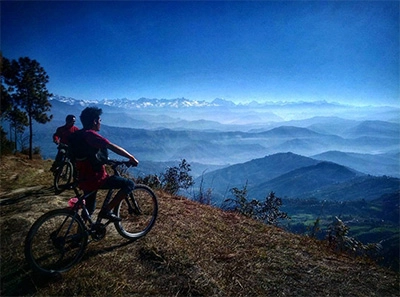
Mountain Biking is one of the adventurous sports which can be explored on the Nagarkot trails. Adoring the beautiful landscapes, and picturesque views, mountain biking lovers can go for this exciting adventure on the popular ‘Loop Route’. Rent the bikes for this mountain biking adventure.
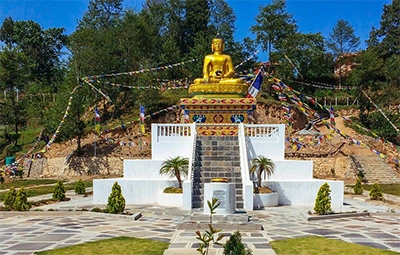
Sightseeing to nearby peaceful but beautiful Buddha Peace Park by an hour’s walk is a pleasant experience. The Grand Golden Buddha statue that overlooks the beautiful valley is not to be missed. An entry fee is required to get here. Planting a sapling in the memory of your loved ones is one of the best […]
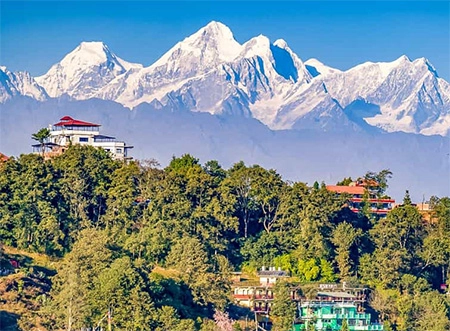
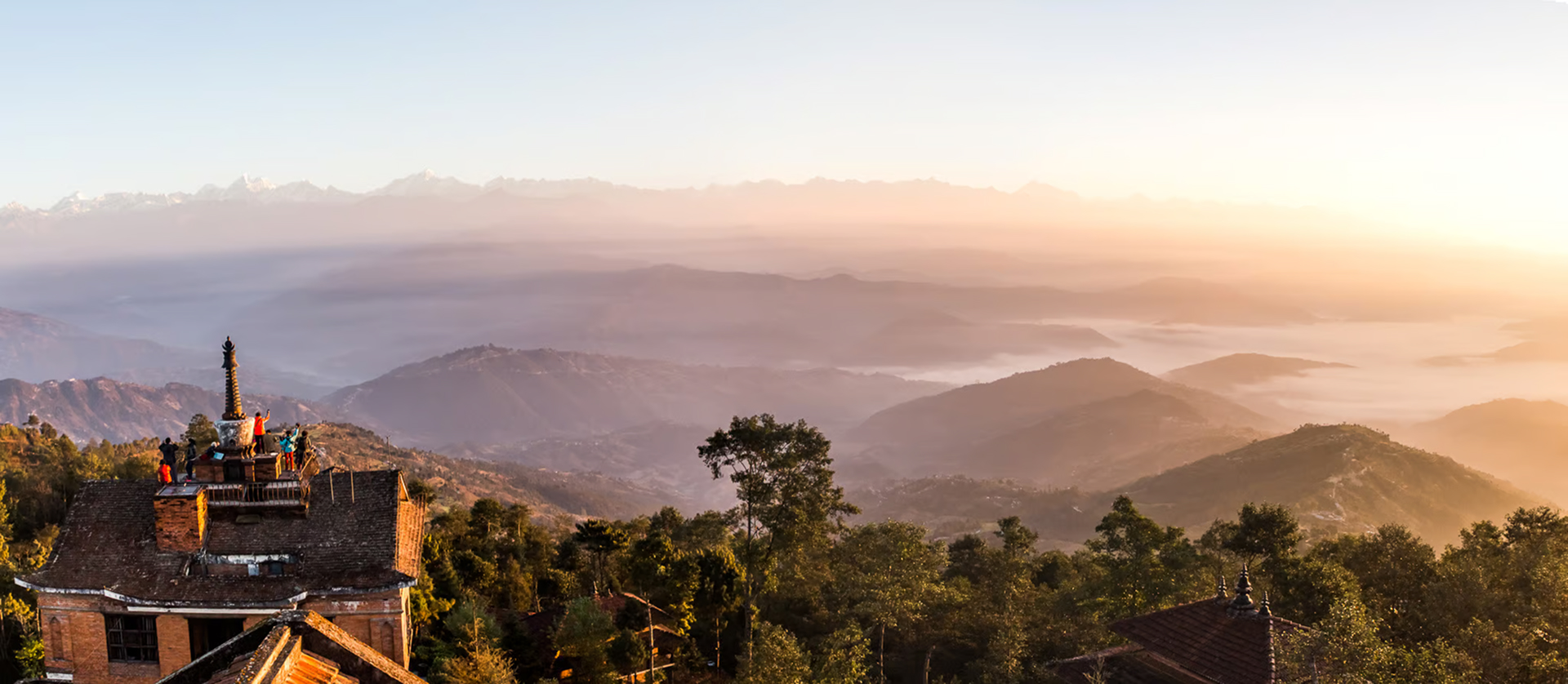
Sunrise view is the best attraction of the Nagarkot. The sunrise view over stunning Himalayan ranges from the Nagarkot View Tower is captivating. The panoramic Himalayan views including the world’s highest Mt. Everest on a clear day are a treat to watch. We assure you the sunrise viewing is sure to enchant you and will […]
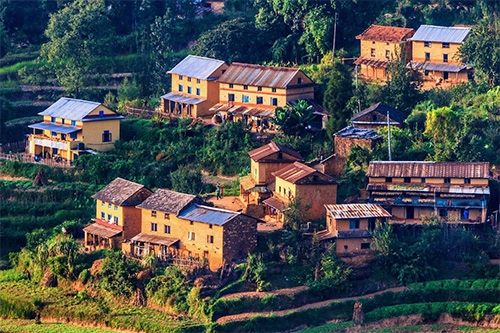
Nagarkot is far from the hustle and bustle of the city. The tranquil environment with scenic landscapes is a perfect getaway. The village tours in Nagarkot are one of the best ways to immerse yourself in the culture, tradition, and lifestyle of local ethnicities. The naturalness of the village is the prime highlight.
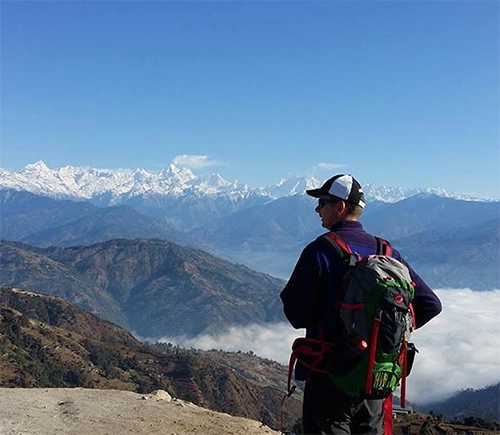
Nagarkot hiking trails also popular as the Panoramic Trail encompasses the Nagarkot Nature Trail. Nagarkot-Changu Narayan Trek, Nagarkot-Sankhu Trek, Nagarkot-Namo Buddha, etc. are some of the famous hiking destinations. Walk through the trails of lush green forest, and terraced fields, admiring the natural beauty of the environment in a peaceful setting. A guide is optional […]
About Nagarkot
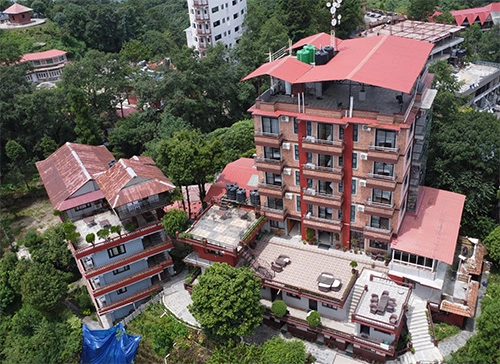
Nestled 32 kilometers east of Kathmandu, Nagarkot is a picturesque hill station, offering awe-inspiring aerial views of Nepal’s major Himalayan peaks, including the iconic Mt. Everest. Situated at 2175 m above sea level, this enchanting destination captivates visitors with its pristine beauty and panoramic vistas of the Himalayas ...